News
Reviews in progress

Final program
Book of abstracts
Introduction
University
Faculty
Conference
General information
Deadline
Participants
Plenary lectures
Daily programme
Study programs
Publications
Proceedings
Review process
Instruction to authors
Contact
Links
Faculty of Mathematics and Physics
Charles University
35th Annual Student Conference |
 |
|
|
Charles University |
Charles University
The oldest university in central Europe, Charles University was founded on April 7, 1348 by Charles IV, later the Holy Roman Emperor and the King of Bohemia. From its foundation it was devoted to studia generalia and it was endowed by the emperor with all the privileges enjoyed by older European universities. The university still bears his name and still strives to fulfil the vocation, which its founder so wisely intended for it: to be a place which opens the way to education, wisdom, and knowledge. Since its foundation, however, Charles University has also been an international institution, welcoming in its lecture halls students and distinguished academics from all over the world, contributing to creation of European and world science and becoming mother or sister to many other European universities in neighbouring areas.
At present, Charles University consists of seventeen faculties and four university institutes that educate more than 51,000 students including ≈ 30 % of foreigners a year. The faculties are centres not only for teaching, but mainly for research and scholarship.
Faculty of Mathematics and Physics
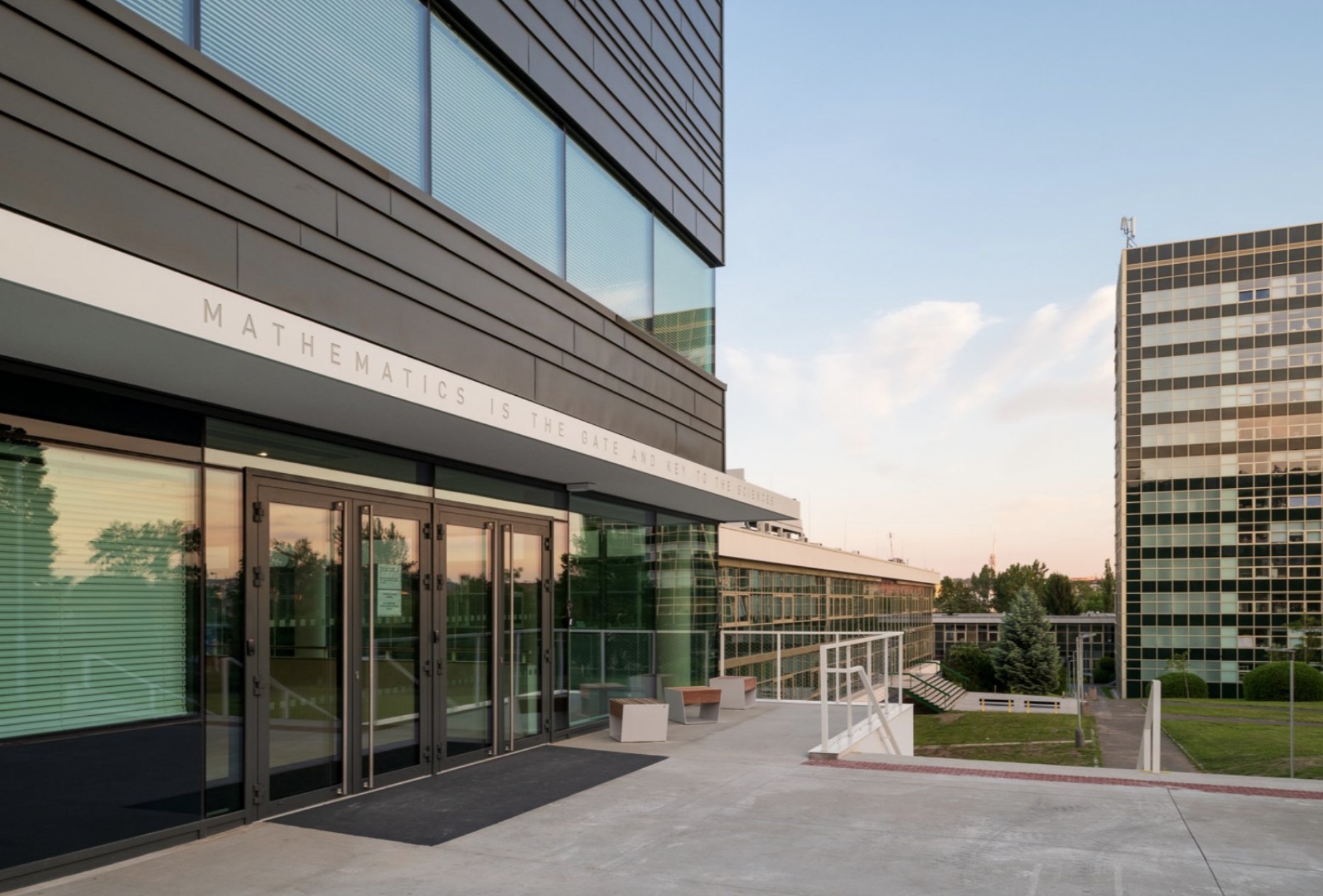
The Faculty of Mathematics and Physics is one of the faculties of Charles University. Mathematics, physics, and astronomy which today belong among the exact or natural sciences, were lectured at the university almost from the very beginning. Among the scholars who have worked at and/or cooperated with Charles University and its faculties while staying in Prague were Tycho Brahe, Johannes Kepler, Bernard Bolzano, Ernst Mach, Albert Einstein, Rudolf Carnap and Jaroslav Heyrovsky. Mathematics and physics were traditionally taught within the frame of the Philosophical Faculty (Faculty of Arts) until 1920 when the independent Faculty of Natural Sciences came into existence. Nowadays, it is the Faculty of Mathematics and Physics established in 1952, which provides education in all fields of computer science (informatics), mathematics, physics in BSc, MSc and PhD courses, and offers training for those that intend to graduate as school teachers of these subjects. A characteristic feature of the Faculty is the close interconnection of teaching activities and a wide spectrum of research work.
At this Faculty, students benefit from being taught by those at the forefront of scholarship and research in their fields. The Faculty consists of three sections: the School of Computer Science, the School of Mathematics, and the School of Physics.
Week of Doctoral Students
The Faculty organizes an international student conference every year as a part of the education of postgraduate students. This activity is focused on the postgraduate students of physical study programs. In order to give the students an opportunity to prepare for their future participation in international conferences, the structure and regime of the WDS resemble strongly a conference form: near study programs are grouped into symposia, and particular sessions of symposia are lead by experienced chairs and young researchers, time-schedule for contributions is firm, language of the conference is English and the written contributions are published in reviewed Proceedings.
WDS conferences are open: besides students enrolled at the Faculty, the staff of the Faculty and co-operating academic institutions, students, and experts of other Czech and foreign universities have always taken part. Their active presence allows the students, the supervisors, and the members of the Doctoral Study Program Committees to make an objective evaluation of the results of their own work.
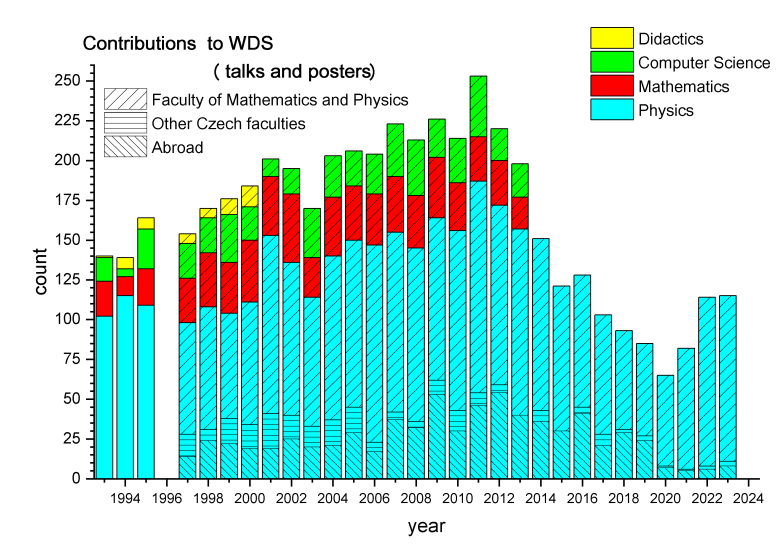
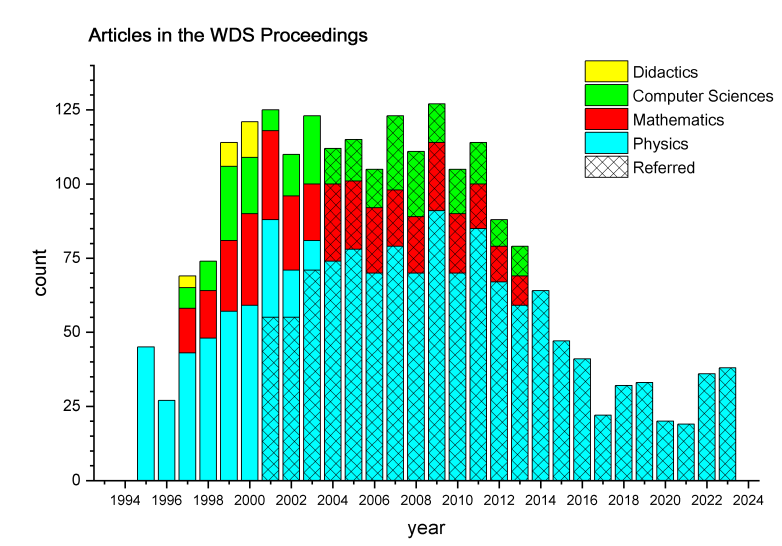
A history of WDS documents a short survey of previous activities presented in following diagrams that show the numbers of participants and published papers in the WDS Proceedings. Note a traditionally good quality of the Proceedings because you can find over 1250 citations to articles in previous volumes at Web of Science and this number increases every year.
Deadlines
Request of support — May 15, 2026 (registration required).
Registration and abstract submission — May 15, 2026.
WDS 2026 meeting — May 26–28, 2026.
Submission of the manuscripts for the Proceedings — June 14, 2026.
Registration form
- CLOSED – REGISTRATION and abstract submission form
- CLOSED – request for the financial supports
Daily programme
The oral contributions, and poster presentations from 12 physical study programs will be divided into the symposia in accordance with their topics and the amount of contributions in particular fields.
WDS 2026 offers two types of contributions:
- Oral presentations of doctoral students finishing their first or second year of study. In 20 minutes, students report on the state-of-art in their research branches (as they understand it after a year studying the literature) and on their own research plans and, maybe, their first scientific results.
- Posters (connected with a 5-minute oral presentation) of older students which show their
own original scientific results.
Dimensions of poster boards are: 150×100 cm (portrait). - We traditionally prepare the Book of Abstracts on the date of the conference start.
We suppose to organize a joint open-air poster session (on Wednesday, May 27, 2026) of all participants accompanied by a small refreshment, if possible. We will inform you about the exact organization later.
Plenary lectures | top of the page |
We are planning plenary lecture interesting for all participants (a list of the general lectures presented in previous years).
-
Grimmich, N.:
Insights into the magnetopause: A comparison of models and observations of the dynamic boundary between the solar wind and the Earth's magnetic fieldThe planetary magnetic field surrounds the Earth like an invisible shield. It forms a barrier to the stream of high-energy particles emanating from the Sun, known as solar wind. Similar to a river flowing around a rock, the solar wind is slowed down and diverted around the Earth’s magnetic field in what is known as the magnetosheath. The boundary between this flow region and the sphere of influence of the planetary magnetic field, called the magnetosphere, is the magnetopause. Satellite observations and simulations can be used to model the shape and location of the boundary, as well as its reaction to the solar wind. For this purpose, empirical formulations are most commonly used in a quasi-static situation. In many cases, models correctly predict the location of the magnetopause with an expected degree of uncertainty. However, large deviations of a few Earth radii between the predicted and actual observed locations are not uncommon, significantly exceeding this degree of uncertainty. Some of the deviations can be attributed to well-known modelling issues. However, detailed investigations into these large deviations also reveal that certain solar wind conditions can lead to them occurring. Overall, this highlights important aspects of solar wind–magnetosphere interactions and suggests possible approaches that could contribute to improving existing models.
Study programs
| P4F1(A) | Theoretical Physics, Astronomy and Astrophysics (doc. RNDr. Oldřich Semerák, DSc.) |
P4F7(A) | Physics of the Earth and Planets (doc. RNDr. Hana Čížková, Ph.D.) |
|
| P4F2(A) | Physics of Plasmas and Ionized Media (doc. RNDr. Jiří Pavlů, Ph.D.) |
P4F8(A) | Atmospheric Physics, Meteorology and Climatology (prof. RNDr. Petr Pišoft, Ph.D.) |
|
| P4F3(A) | Physics of Condensed Matter and Materials Research (prof. Mgr. Jakub Čížek, Ph.D.) |
P4F9(A) | Particle and Nuclear Physics (prof. RNDr. Karol Kampf, Ph.D.) |
|
| P4F4(A) | Biophysics, Chemical and Macromolecular Physics (doc. RNDr. Peter Mojzeš, CSc.) |
P4F11(A) | Mathematical and Computer Modelling (prof. Mgr. Milan Pokorný, Ph.D., DSc.) |
|
| P4F5(A) | Physics of Surfaces and Interfaces (doc. RNDr. Pavel Sobotík, CSc.) |
P4F12(A) | Physics Education and General Problems of Physics (doc. RNDr. Zdeněk Drozd, Ph.D.) |
|
| P4F6(A) | Quantum Optics and Optoelectronics (prof. RNDr. Petr Malý, DrSc.) |
P4F13(A) | Physics of Nanostructures and Nanomaterials (prof. RNDr. Jana Kalbáčová Vejpravová, Ph.D.) |
|
The applicants outside of the Faculty are asked to indicate the code of the study program which is relevant to the topic of their contributions.
Proceedings
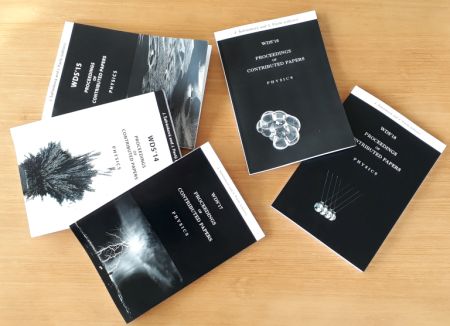 The Faculty plans to issue the Proceedings of contributed papers. You can visit www pages with contents of proceedings of
WDS'95,
WDS'96,
WDS'97,
WDS'98,
WDS'99,
WDS'00,
WDS'01,
WDS'02,
WDS'03,
WDS'04,
WDS'05,
WDS'06,
WDS'07,
WDS'08,
WDS'09,
WDS'10,
WDS'11,
WDS'12,
WDS'13,
WDS'14,
WDS'15,
WDS'16,
WDS'17,
WDS'18,
WDS'19,
WDS'20,
WDS'21,
WDS'22,
WDS'23,
WDS'24,
and WDS'25.
The Faculty plans to issue the Proceedings of contributed papers. You can visit www pages with contents of proceedings of
WDS'95,
WDS'96,
WDS'97,
WDS'98,
WDS'99,
WDS'00,
WDS'01,
WDS'02,
WDS'03,
WDS'04,
WDS'05,
WDS'06,
WDS'07,
WDS'08,
WDS'09,
WDS'10,
WDS'11,
WDS'12,
WDS'13,
WDS'14,
WDS'15,
WDS'16,
WDS'17,
WDS'18,
WDS'19,
WDS'20,
WDS'21,
WDS'22,
WDS'23,
WDS'24,
and WDS'25.
If you wish to publish your contribution in the book of Proceedings of WDS 2026, you are asked to answer the corresponding question in the registration form:
- I suppose to publish my contribution in the WDS proceedings (yes/no).
The contributions will be collected electronically (TeX+PS(PDF) or DOC files) via webform you'll receive later (in case of troubles, contact us at wds2026 @ aurora.troja.mff.cuni.cz). It should be submitted not later than June 14.
Language of Publication: English
Length of Manuscripts: 4–8 pages: A4 format
Student's contributions can be published only under the agreement of the supervisor. Your supervisor will receive the corresponding form via the e-mail address that you have provided in your application.
Instructions to authors for the preparation of electronic manuscripts
The electronic manuscript of contributions to be published in the Proceedings are expected to be prepared in LaTEX or MS Word. There is an option to set the basic font size of the printed article to 11 or 10 pt.
-
The authors wishing to prepare their
articles in LaTEX are requested to use the prepared LaTEX style
wds11.sty (wds10.sty — 10pt version)
together with the agu11.sty (agu10.sty, resp.) include file (all of
them are written for LaTEX 2.09
and can be therefore used in LaTEX2e
compatibility mode, too). Authors can also download the sample
LaTEX file :
LaTEX sample files Sample file (LaTEX2e .. e.g. MikTeX) wds2e_ex.tex 16 kB Sample file (LaTEX2e for those using BibTeX — requires natbib package) wds2e_exbib.tex 16 kB egs.bst (bibliography style) 37 kB - The authors preferring MS WORD 2000 (or newer) are requested to use the template wds2000e11.dot (wds2000e10.dot — 10pt version). They can also download the example MS Word document prepared using this template wds20e11.doc (wds20e10.doc — 10pt version) (430kB) or compressed wds20e11.doc.gz (wds20e10.doc.gz, resp.) (40kB).
Both examples include the required font settings, formatting of title, authors, affiliations, abstract, references, and page headings, as well as suggested article sections. Black&white figures and caption examples are also included. All questions regarding the above style and templates should be addressed to WDS 2026 Organizing Committee.
Review process
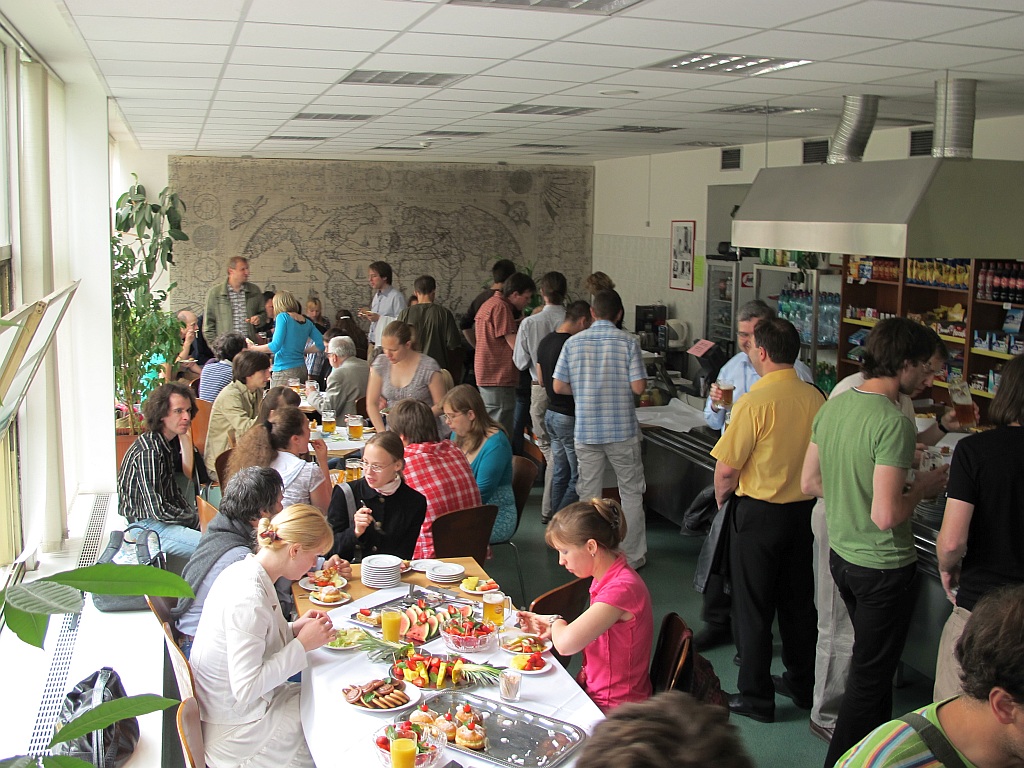
All manuscripts will be reviewed by one specialist and one doctoral student appointed by the editors or the student's supervisor (she/he would fill up the "supervisor agreement form" received by e-mail).
We will return comments, requests, and/or suggestions of reviewers to the authors during autumn. Then, the authors should submit the final version of their papers (together with the Letter to the referees reflecting your changes and complements). The authors will receive further information later.
Finally, we will distribute the PDFs of accepted papers for Proceedings as soon as possible (probably at the end of the year).
We are looking forward to meet you!
Further information |
| Address: | Faculty of Mathematics and Physics Charles University V Holesovickach 2 180 00 Prague 8 J. Safrankova, phone: e-mail: jana.safrankova at mff.cuni.cz |