Our major equipments
The research in our group is historically mainly based on SPM techniques. We have 30 years of experience in the field and we are equipped with both by fully self-designed instruments and by commercial systems.
POLAR system from ScientaOmicron
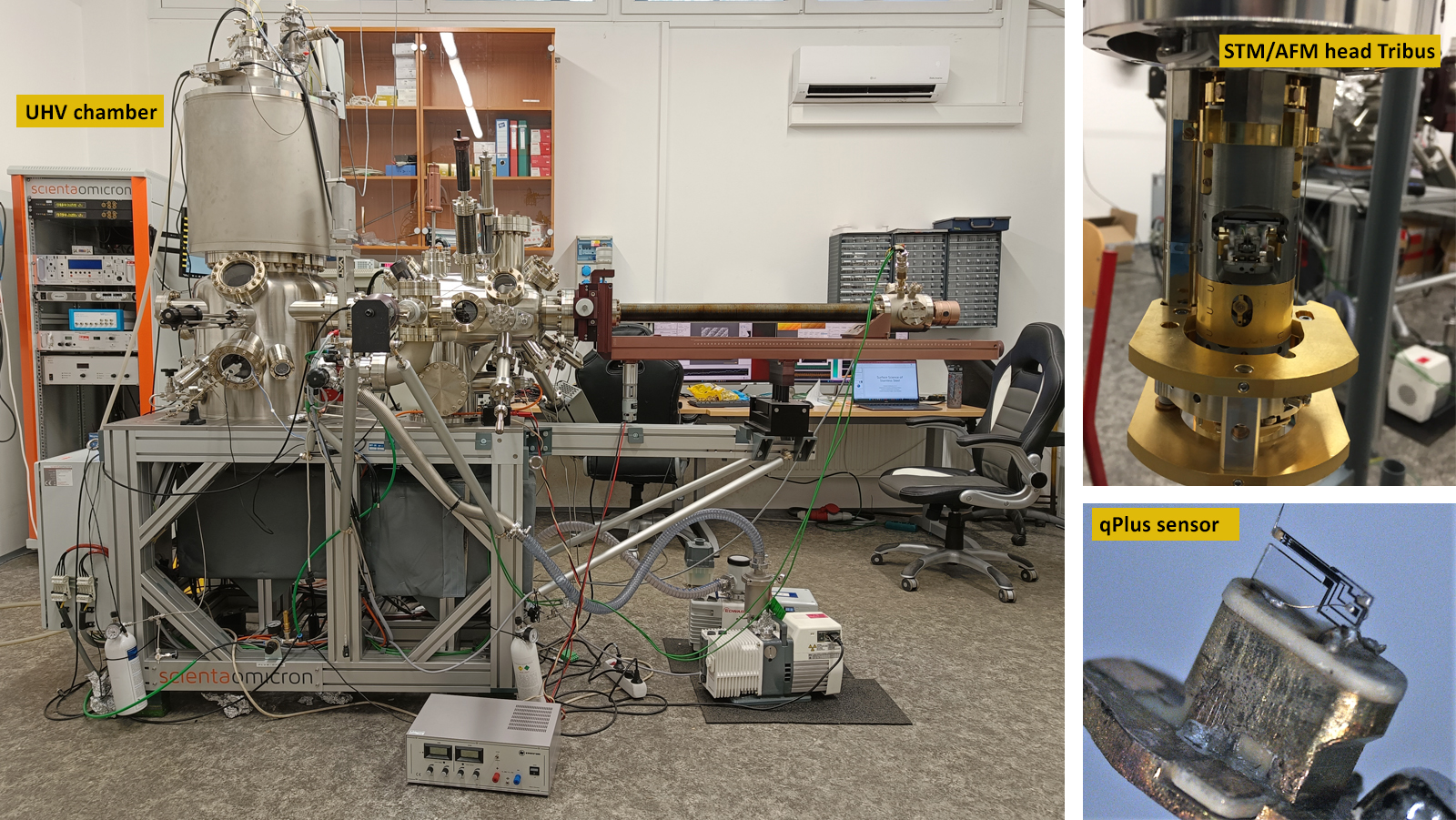
- The main technique is the combined Scanning Tunneling Microscopy/Atomic Force Microscopy (STM/AFM) with a cryogenic SPM head.
- Analysis chamber equipped with the Tribus SPM head.
- Cryostat with a base temperature of less than 5K and a hold time of 200-300 hours.
- The head has outstanding mechanical stability and thermal drifts (an order of magnitude better compared to the previous generation of SPM heads)
- nc-AFM operation with a custom preamplifier, noise level less than 15 fm/root(Hz)
- Nanonis Mimea electronics.
High-resolution X-ray photoelectron spectroscopy (XPS)

- PREVAC EA15 hemispherical analyzer and RMC50 monochromated dual-anode source (Al/Ag anode).
- Hemispherical analyzer (150 mm radius) has selectable lens modes (Tranmission, anmgular) and the X-ray source provides narrow-linewidth X-rays with both focusing and non-focusing spots
- 2D MCP–phosphor–CCD detector for simultaneous energy and spatial imaging.
- Motorized slit carousel and adjustable iris to optimize resolution, signal intensity, and analysis area.
- • UHV system with differential pumping and shutter protection for clean, stable operation.
- Fully automated, recipe-based operation via Spectrium software and RUDI EA2 electronics.
Variable temperature scanning tunneling microscope (STM)
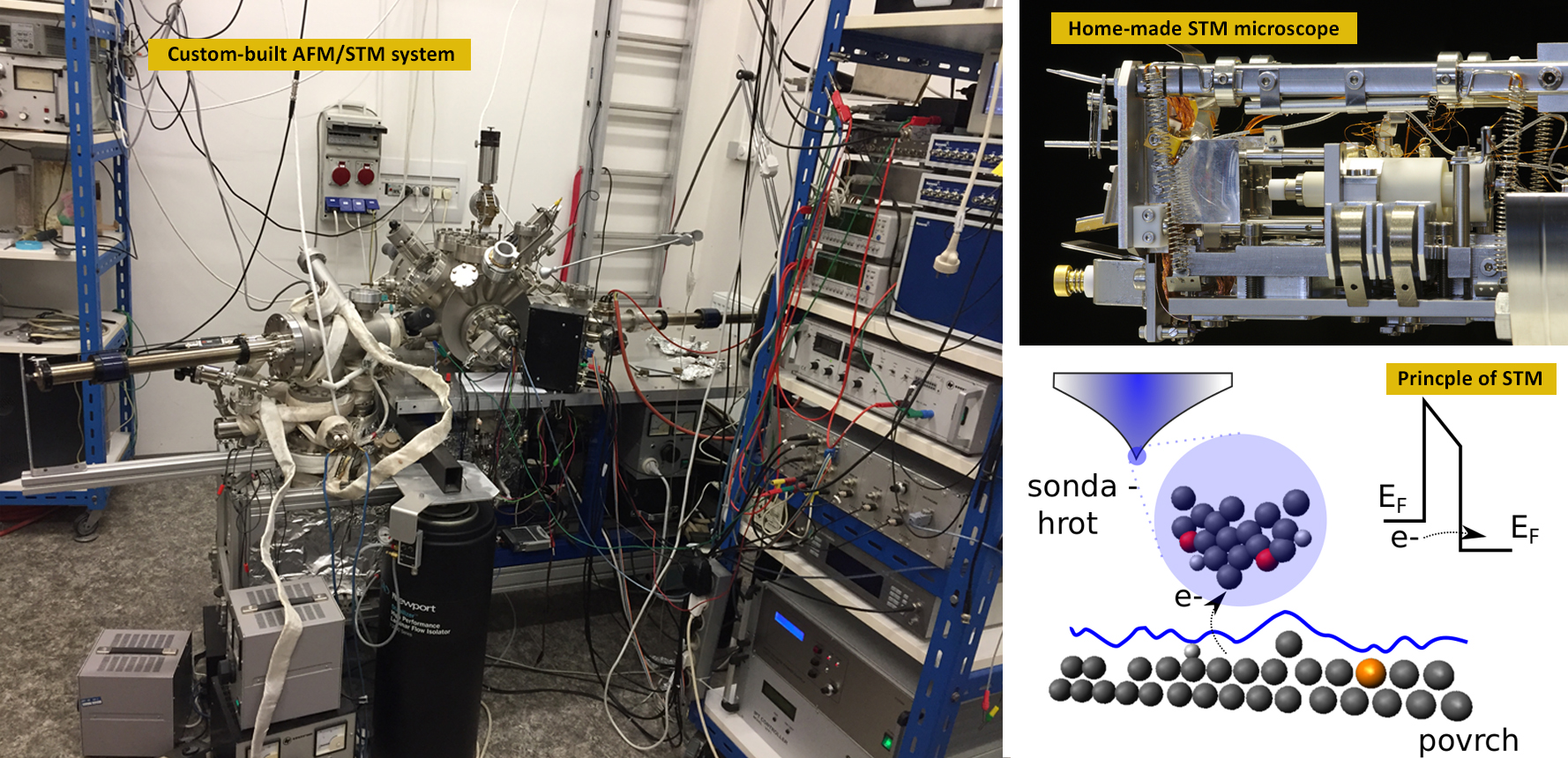
- Fully home-built UHV instrument.
- Operation from 100 to 700 K.
- Our own design of STM electronics and software.
- Currently upgrading to combined AFM/STM operation.
- Allows imaging of surfaces with atomic resolution.
- Principle - a probe - the last atom of a sharp tip - scans along the surface and detects other atoms or molecules.
Variable temperature scanning tunneling microscope (STM)
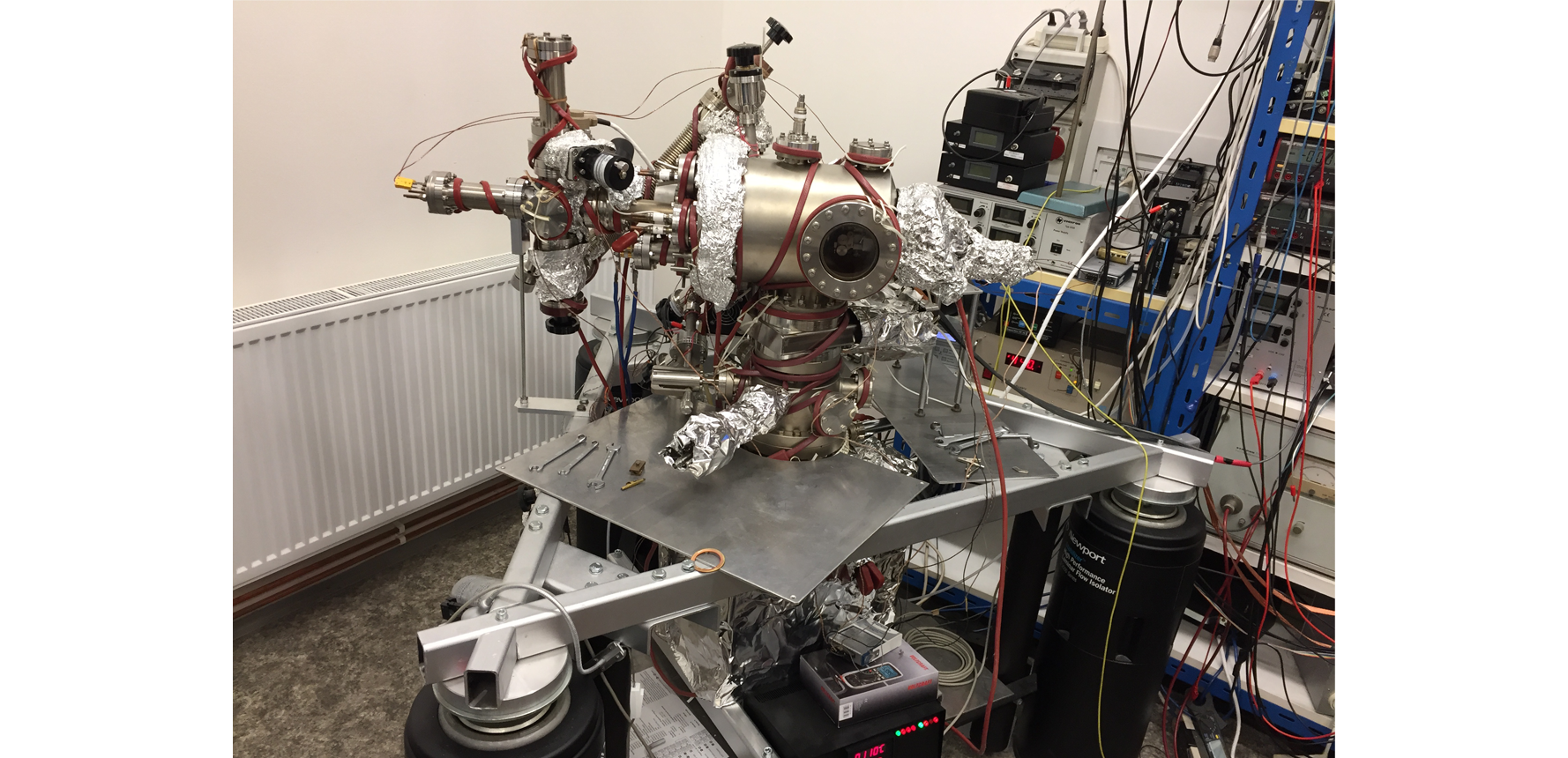
- Older home-built STM.
- Operation from 300 to 700 K.